

What if the Marais district were not just a neighbourhood, but a mirage? A place where you think you’re simply strolling along, before gently drifting away to another era, another culture. One step into a stone-paved alleyway and the scene shifts: a 17th-century façade, a sweet scent escaping from a half-open door, and suddenly, a Parisian neighbourhood becomes a journey through time.
Beneath its picture-postcard façade, the Marais (Paris’s 3rd district) holds a thousand ways to be surprised. With its historical heritage, iconic spots and a Japanese-inspired culinary adventure, a stroll here takes on an unexpected dimension. As you wander through the streets, the experience continues, eventually revealing a unique itinerary: a hanami interlude where spring seems to last all year round, discreetly tucked away on Rue des Gravilliers, voted one of the ‘coolest’ streets in the world in 2025 by the British magazine Time Out.
Culture, shopping, places to eat: everything you need to do in the Marais, Paris’s 3rd district
Once a swamp that became the ‘kitchen’ of Paris in the Middle Ages, today the Marais is a genuine open-air museum. Art galleries, concept stores and top dining spots intertwine here in an almost village-like atmosphere. It is this blend of historical heritage and contemporary creativity that makes it one of the capital’s most vibrant and inspiring neighbourhoods.
How did the Paris swamp become one of the city’s most iconic areas, home to the world’s most stylish streets? These historic monuments and the migration of diverse communities have helped to bring the area to life and modernise it over time, transforming it into the Marais we know today : a neighbourhood like any other in Paris.
Le Marais: a neighbourhood like any other in Paris
In the heart of Paris, between the Hôtel de Ville and the Place de la République, the Marais district stands out as a world of its own. Neither entirely stuck in the past nor completely transformed by modernity, it cultivates a unique identity, full of contrasts and surprises.

The name ‘Le Marais’ has a long history. In the past, this part of the right bank of the Seine was a vast wetland, consisting of swamps and waterlogged land. Gradually, from the Middle Ages onwards, the land dried out to become pasture, then market gardens in the 12th century. The area has retained its greenery, criss-crossed by small paths and cultivated plots on the outskirts of Paris.
The Marais saw rapid development in the 16th century until the accidental death of King Henry II in 1559, near what is now the Place des Vosges. A few decades later, Henry IV gave the neighbourhood a new burst of vitality with the construction of the Place Royale, now the Place des Vosges, in the early 17th century. Gradually, the Marais became one of the most elegant and lively neighbourhoods in Paris, where the bourgeoisie would invite the greatest intellectuals of the time, such as Sully and Richelieu, to their luxurious privates mansions.
In the 1960s, the Minister for Culture, André Malraux, undertook a major restoration programme to showcase the neighbourhood’s mansions, its ancient alleyways and the full charm of its architectural heritage. Over time, the neighbourhood has been revived to become one of the most vibrant areas of Paris, thanks in particular to these must-see historic monuments.
The must-see historic monuments of the Marais
Getting lost in the Marais is like travelling through the centuries without ever leaving Paris. Every street tells a story and every wall whispers an anecdote. Its wonders cannot be summed up in a few lines, so here is our selection of historic monuments that you must visit on your next stroll through the Marais.
Place des Vosges
Formerly known as “Place Royale”, the Place des Vosges has become the beating heart of the Marais. Listed as a historic monument since 1954, it captivates visitors with its façades, combining 36 identical pavilions built of red brick and white stone with slate roofs, as well as its perfectly laid-out central garden.

At number 6 on this very square stands Victor Hugo’s house. The writer lived here for around ten years, and it was here that he wrote Les Misérables and Ruy Blas, amongst other works. His home is now a museum, and admission to its permanent collection is free. A simple visit allows you to soak up the writer’s genius, particularly through his Chinese-style drawing room, which he decorated himself, his bedroom, and his study, where objects he had personally decorated are displayed in the room.
Musée Picasso
Housed in the Hôtel Salé, the Picasso Museum is home to the world’s largest collection dedicated to the Spanish artist. Paintings, sculptures, ceramics, drawings and photographs… over 5,000 works trace Picasso’s career, from his earliest sketches as a teenager to his final creations. A leading figure of Cubism, Picasso reveals here the full richness of his creative world and the deep connection he had with Paris. During a family stroll through the Marais, the workshops on offer for children also provide a fun and engaging way to explore the museum.

Crossroads between the Rue des Francs-Bourgeois, Rue du Temple and Rue des Archives
Three streets stretch south of the Marais, all with a shared aim: to satisfy Parisians’ desire for the latest trends, whether in art, fashion or interior design! On Rue des Francs-Bourgeois, historic charm and modern dynamics blend together amongst luxury boutiques, concept stores featuring independent French brands, and art galleries. Whether you’re looking for a vintage gem, a one-of-a-kind piece by a fashion designer or a stylish decorative item for your home, this is the perfect place to hunt for that rare find.

Its inner courtyards, framed by carved gateways, evoke the Marais district’s noble past, with its elegance shining out at sunset as the golden light reflects off the facades lining the street. It’s the perfect opportunity to stroll with your loved ones amidst this golden show, particularly on Sundays when the street is entirely reserved for pedestrians.

It crosses Rue du Temple, one of the most iconic streets in the Marais district. Long and winding, it embodies a free-spirited, lively and cheerful atmosphere, centred around coffee shops, trendy boutiques and a vibrant arts scene. Fashion and art lovers see it as a haven of Parisian charm, stretching from Rue de Rivoli to Rue des Filles du Calvaire.

It is not the only street that runs through the Marais from south to north. Rue des Archives also reveals its charm through the National Archives (Hôtel de Soubise et de Rohan) which line it. Lined with private mansions, its southern section is one of the heartlands of Parisian LGBTQIA+ life, with its dedicated bars and shops. For fashion enthusiasts, this is the must-visit street for your shopping trip, whatever your style!
Museum of Arts and Crafts (Musée des Arts et Métiers)
Behind the walls of this former religious place lies one of the world’s oldest museums of technology. Founded in 1794, the Musée des Arts et Métiers invites visitors to explore several centuries of human ingenuity through a collection dedicated to the great inventions that have shaped our daily lives.
Organised into seven thematic sections, its collections showcase everything from the earliest scientific instruments to major advances in industry, transport and communication. An inspiring visit for curious minds, where every object tells the story of a milestone in the great adventure of progress.
Centre Georges Pompidou
A symbol of bold, modern architecture in the heart of Paris, the Centre Georges Pompidou is impossible to miss, easily recognisable by its colourful pipes and its famous panoramic spiral staircase. Even before stepping inside this architectural masterpiece, its vast square offers a never-ending show. Musicians, dancers, street performers and mimes take to the square one after the other, creating a lively atmosphere that is an integral part of the experience.
Inside, the National Museum of Modern Art brings together works by Kandinsky, Matisse and Warhol, alongside more recent creations. Temporary exhibitions, performances and artistic experiments are constantly being renewed to keep sparking the artistic curiosity of Parisians.

To wrap up the visit in style, head to the top floors of the building. The panoramic view over the rooftops of Paris, the historic monuments and the Eiffel Tower offers an exceptional overview of the capital, like a hidden treasure following this creative immersion. Currently closed until 2030 according to the Centre Pompidou’s official website, its transformation promises to leave its ‘original utopia’ intact.
The Red Children’s Market (Le marché des Enfants rouges)
Tucked away discreetly behind a gate on Rue de Bretagne, the Marché des Enfants Rouges is a place that people often stumble upon by chance, and which leaves a lasting impression. As Paris’s oldest covered market, it has for centuries fostered a warm, almost village-like atmosphere in the heart of bustling Paris.
Its name dates back to the 17th century and refers to the neighbouring orphanage, whose pupils once wore red uniforms. Today, the history of the place blends with the aromas from the stalls, where fishmongers, cheesemongers, greengrocers and artisans set up their stalls, bringing food from all corners of the world.

Beneath its glass roofs, flavours intertwine and cultures come together around a table filled with local specialities, taking you on a journey from one continent to another without ever leaving Paris. A culinary stopover that perfectly captures the spirit of the Marais (Paris’s 3rd district), a neighbourhood where heritage and diversity come together naturally.
And to extend this culinary journey all the way to Japan, one final detour awaits you just a few minutes away, on Rue des Gravilliers. The hanami journey features a selection of top eating spots inspired by Japanese tradition, inviting you to continue your stroll in the spirit of Japanese spring.
Following the fire on the evening of 12 October 2026, the Marché des Enfants Rouges [the Red Children’s Market] is no longer accessible.
Hanami journey: a taste of Japan on Rue des Gravilliers
What if, as you round a corner, the Marais transported you to Japan? Inspired by the Japanese tradition of contemplating cherry blossoms, the hanami journey invites you to enjoy a delicate, almost poetic retreat in the heart of the city, taking in three venues serving authentic specialities.
HANAMI TAIYAKI, specialised in Japanese taiyaki
Une halte sucrée-salée où l’on découvre ces pâtisseries en forme de poisson, généreusement fourrées à l’intérieur. Spécialité emblématique de la streetfood japonaise, le taiyaki se décline ici dans plusieurs versions gourmandes qui séduisent aussi bien les curieux que les amateurs de culture japonaise : azuki, caramel, sakura ou encore mozzarella fondante, chaque personne y trouve son envie.

Traditionally enjoyed at festivals, this delicious little fish, served with a matcha latte or an ube latte, is perfect for treating yourself while strolling through the narrow streets of the Marais (Paris 3), between sightseeing stops or during shopping. Whether you’re exploring the neighbourhood for the first time or love to return regularly, HANAMI TAIYAKI (25 rue des Gravilliers, 75003 Paris) offers a unique culinary treat. It’s a simple way to take a trip to Japan without leaving the streets of Paris, just 5 minutes from Arts et Métiers station and around 15 minutes from Châtelet metro station.
HANAMI LUNCH, specialising in Japanese sandwiches (onigirazu)
After a morning spent exploring the treasures of the Marais, HANAMI LUNCH is the perfect place to stop and replenish your energy. Just a 2-minute walk from Arts et Métiers station and 15 minutes from Châtelet, this Japanese eatery serves Japanese-inspired cuisine that combines balance, freshness and generous portions.
Designed as proper complete meals, onigirazu sandwiches showcase carefully selected ingredients for a healthy and nutritious lunch, whatever protein you choose. A far cry from rushed lunches, every bite invites you to enjoy a stroll through the Marais (3rd district, Paris) whilst savouring a meal designed with your wellbeing in mind.

Before heading back to the galleries, museums or shops of the Marais, a stop at HANAMI LUNCH offers the chance to extend your journey, where a simple lunch becomes a true journey of discovery.
HANAMI TEATIME, renowned for its fluffy Japanese pancakes
A moment suspended in time, between reimagined Japanese pastries and delicate drinks, like an invitation to slow down. Here, the Marais changes pace. The hustle and bustle of Paris gives way to a gentle atmosphere that invites you to escape the everyday. You take your time, you observe, you savour the moment, just as you would beneath the cherry blossoms in Tokyo.
Two steps away from the Arts et Métiers and Châtelet stations, HANAMI TEATIME invites you to slow down and enjoy the current moment. Here, the hustle and bustle of the Marais seems to fade away behind the red torii gate, giving way to a gentle and comforting atmosphere inspired by Japanese elegance.


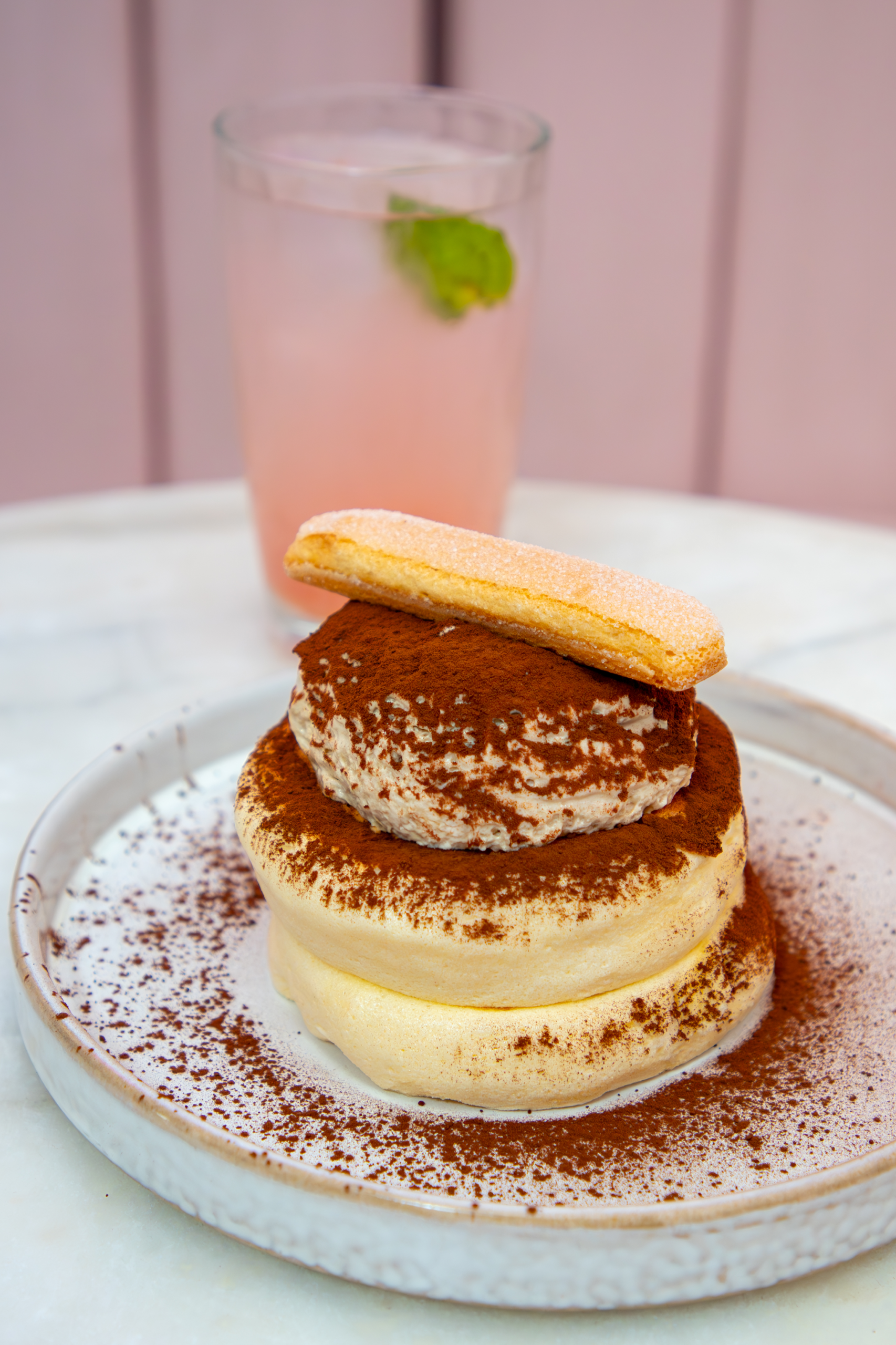
Fluffy pancakes with a twist sit alongside floral drinks and matcha lattes on a menu designed to be an invitation to travel. Each creation evokes a subtle balance between tradition and modernity, between Japanese craftsmanship and French elegance. It’s the perfect spot to treat yourself to a delicately indulgent break after several hours of strolling. This feeling evokes the spirit of hanami in Japan, when one simply pauses to contemplate the cherry blossoms and appreciate the fleeting beauty of the moment.
Whether it’s for brunch, an afternoon snack or a comforting break at the end of the day, HANAMI TEATIME offers a different take on the Marais (Paris 3rd district) experience. A moment of pure indulgence that transforms a visit to the neighbourhood into a true journey for the senses.
This hanami journey is not just a list of places to visit: it’s an experience. A unique way to discover the Marais through the lens of Japanese spring, where every bite becomes a moment to savour, as if the cherry blossom season lasted all year round.
How can you make the most of the Marais in 3 days?
The Marais (3rd arrondissement) is one of those neighbourhoods that cannot be explored in just a few hours. To take the time to soak up its atmosphere, two to three days are often needed. With its heritage, culture, shopping and culinary delights, here’s a way to savour the Marais at your own pace.
Day 1: a blend of culture and trendy spots
Start the day with a visit to one of the neighbourhood’s major cultural attractions. The Musée des Arts et Métiers, the Musée Picasso or the many galleries in the Marais offer an initial taste of the creative spirit that has been bringing these streets to life for centuries.
At lunchtime, pop into HANAMI LUNCH. With dishes inspired by Japanese cuisine, this gourmet break is the perfect way to recharge your batteries before continuing your exploration of the Marais district (3rd arrondissement, Paris).
The afternoon is then spent shopping. From concept stores to independent designers, not to mention interior design shops and specialist bookshops, the Marais is the perfect playground for those who love making wonderful discoveries, at the junction of the Rue des Francs-Bourgeois, the Rue du Temple and the Rue des Archives.
Day 2: exploring the neighbourhood’s history
On this second day, let yourself be guided by the fascinating history of the Marais. Stroll around the Place des Vosges, admire the mansions from the Grand Siècle and lose yourself in the narrow streets where medieval heritage blends with Parisian elegance.
At lunchtime, switch things up with a Japanese brunch at HANAMI TEATIME. A delightful retreat where homemade pastries, refined drinks and Japanese-inspired treats invite you to continue your stroll in style.
In the afternoon, treat yourself to a break in one of the neighbourhood’s gardens before heading to HANAMI TAIYAKI. With a range of sweet and savoury creations, it’s the perfect spot for a comforting afternoon snack after several hours of walking.
Day 3: The art of strolling, Parisian-style
On this final day, head to one of the neighbourhood’s cultural institutions or a temporary exhibition that piques your curiosity. The Marais has that rare ability to always reveal a new side to those who take the time to explore it, such as the Centre Pompidou and its vast square, brought to life by musicians, dancers and street performers.
At lunchtime, head to the Marché des Enfants Rouges. Behind its bustling glass canopies, flavours from all over the world come together in a friendly atmosphere that perfectly encapsulates the neighbourhood’s cosmopolitan spirit.
The afternoon is the perfect time for a more contemplative stroll. Between Rue des Rosiers, the secluded passageways and the historic mansions, every turn holds its own share of surprises. If you’re exploring the neighbourhood with children, the Musée de la Magie, just a stone’s throw from the Place des Vosges, makes for a stop that’s as fun as it is surprising. Automata, vintage toys and demonstrations by passionate magicians spark the curiosity of the youngest visitors, taking them on a journey of wonder and imagination.
To round off this gentle day out, settle down at HANAMI TEATIME. A cup of tea with floral notes, a fluffy pancake with a cloud-like texture and a few calming moments are all it takes to prolong the magic of the Marais (3rd district) just a little longer. This hanami journey is not just a list of places to visit, but a genuine culinary experience through the lens of Japanese spring, where every bite becomes a moment to savour.
So, what is there to do in the Marais? First of all, wander around. Then, soak up its history. Strolling through the Marais neighbourhood means experiencing the intimate yet cosmopolitan side of Paris. One visit always leads to another, as each time it reveals new surprises. And finally, let yourself be surprised by unexpected experiences such as the hanami journey, which reinvents the Parisian stroll with poetry and culinary delights.